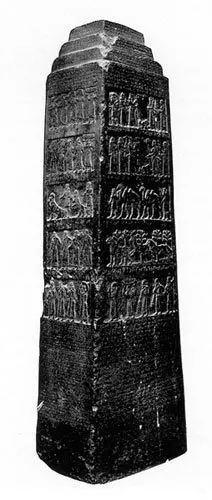
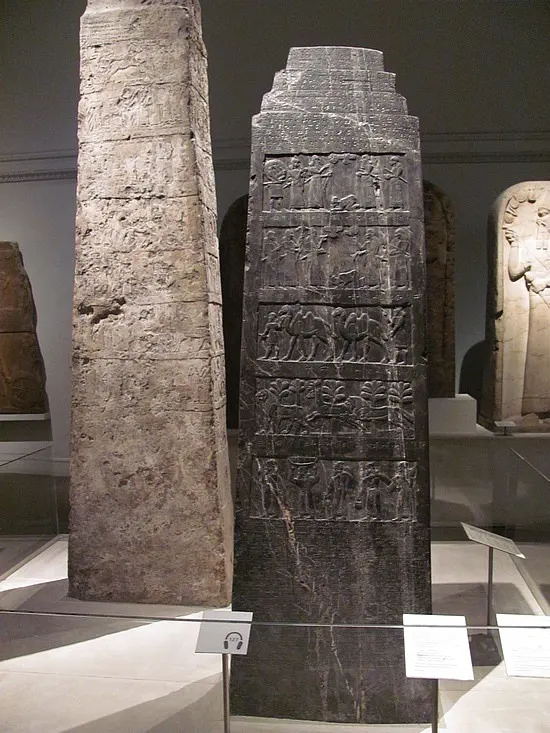
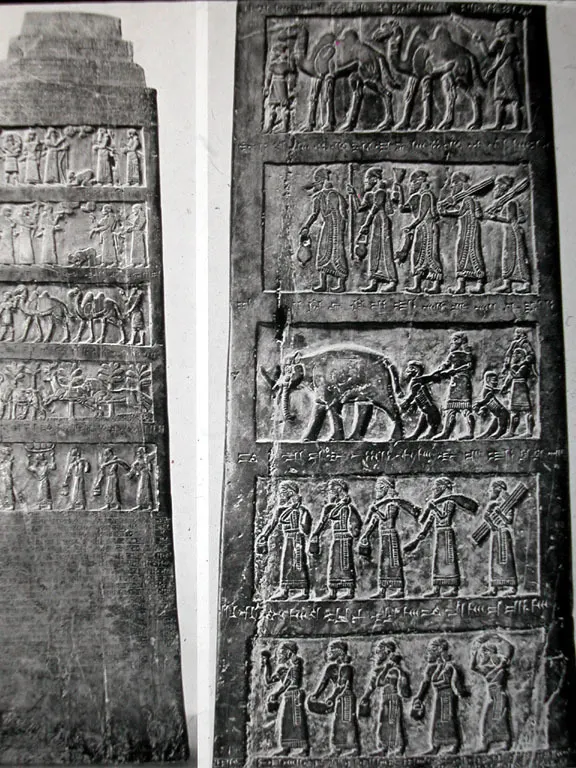
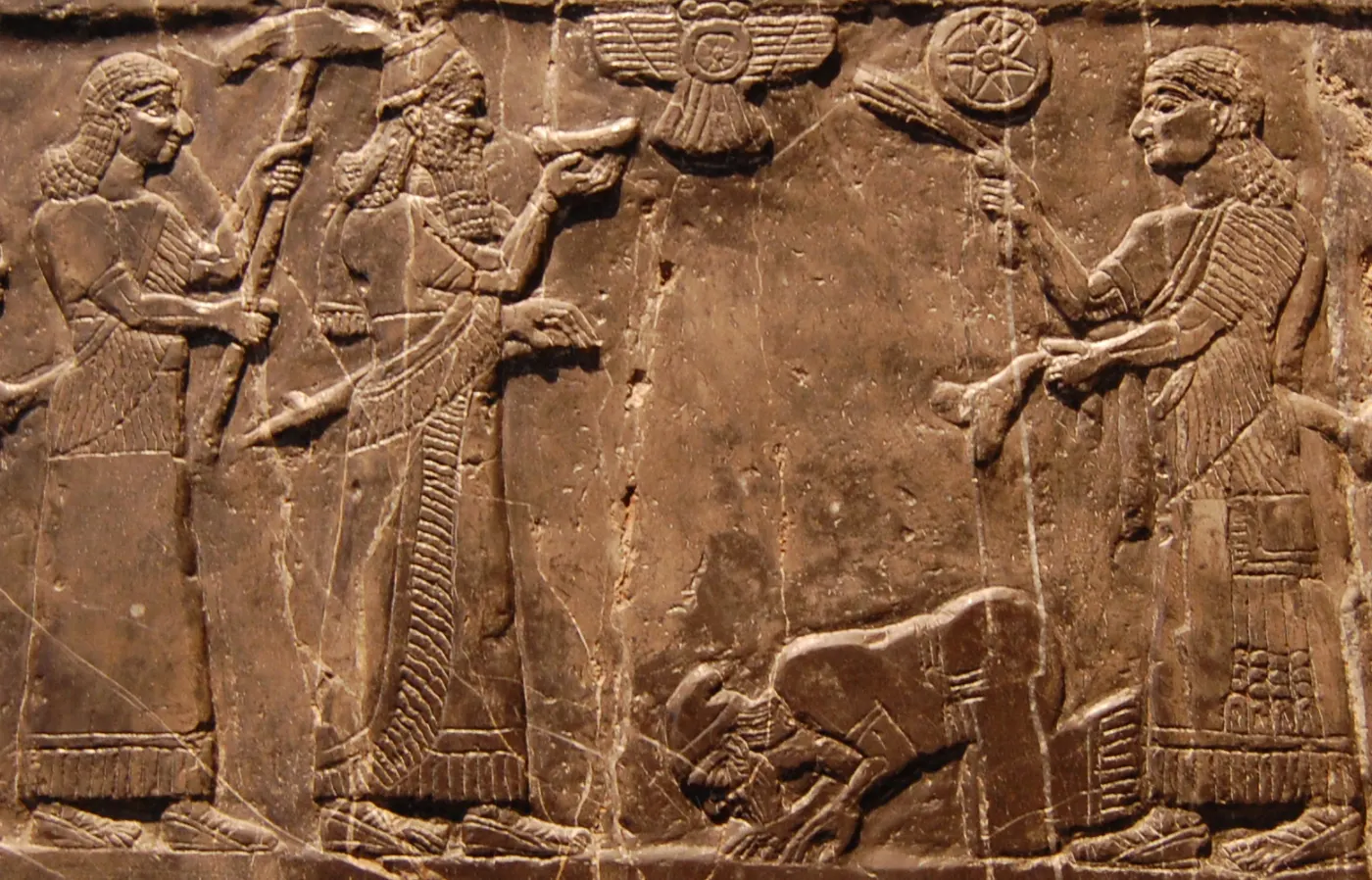
Besides revealing one of the earliest depictions of an Israelite king, the Black Obelisk tell us how they looked and what they wore. In the images you will find below, Black Obelisk of Shalmaneser III, displays the earliest name of an Israelite. This obelisk stands tall, and is four sided getting narrow towards the top like a tower. It was made of black limestone with very important pictures on it.
Shalmaneser III was an ancient king of Assyria and he reigned from 859-824 BC. The Obelisk has one panel of sculpted pictures and an Akkadian Cuneiform inscription describing king Ieua otherwise known as king Jehu, who was the son of one Omri as told in the Bible (II Kings 9-10). King Jehu is paying tribute to king Shalmaneser III in the pictorial depictions.
Those not familiar with non of these names, king Jehu was a king of the northern tribes of Israel, the ten tribes that separated from the union after the dispute between Solomon and his son Rehoboam’s tax hike on the people. The nation split up with every tribe leaving Judah and their neighboring Benjamin brothers. Eventually, the Levites also returned to Judah after being dismissed as priest by the northern ten tribes.
Jehu was on of many bad kings in the northern kingdom who were solely invested in pagan worship. Nevertheless, the finding of this obelisk reveals physical evidence of the existence of the children of Israel, despite other nations trying their best to hide the existence of the children of Israel; but also gives a good idea of what the children of Israel looked like.
Judge for yourself, are these black people? We know Shalmaneser III was a black because the early Assyrians were a black nation… nevertheless judge for yourself and let us know what you think!
The Black Obelisk was found in Northern Iraq (old Mesopotamia) in 1846, and is currently in the British Museum.